
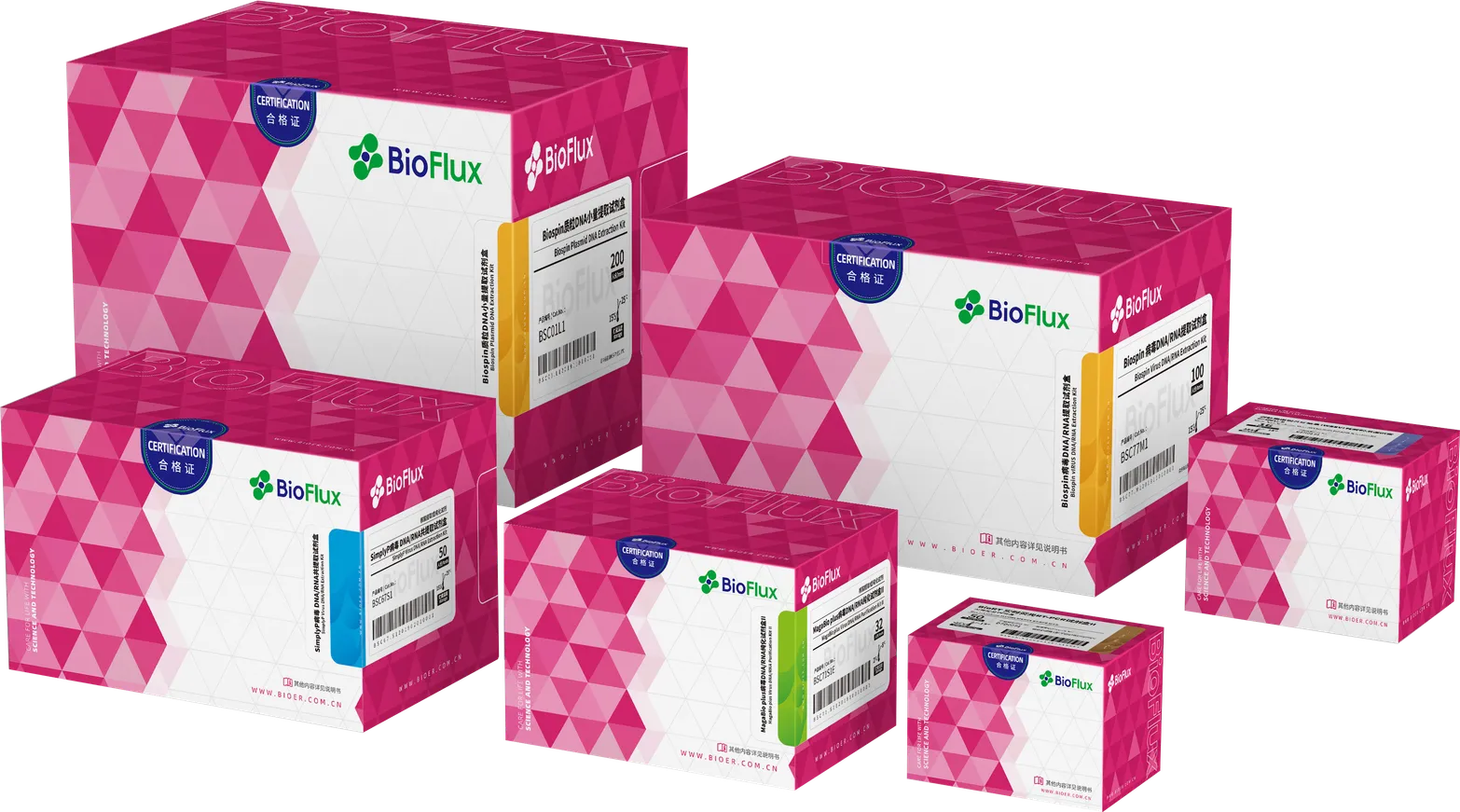
Porcine-derived Nucleic Acid DetectionKit (Fluorescence PCR)
Ensuring compliance with Islamic dietary laws, particularly the prohibition of pork consumption, is crucial in halal food production. However, inadvertent contamination or mislabeling of products containing pork-derived ingredients presents a challenge to maintaining halal integrity. Molecular detection techniques offer a sensitive and specific means of detecting even trace amounts of pork contamination. These methods, including PCR, qPCR, ELISA, and DNA microarray analysis, target unique genetic markers or protein signatures exclusive to pigs. By providing reliable and rapid detection capabilities, molecular assays enhance the ability to verify the absence of pork-derived ingredients in halal food products, thereby upholding their authenticity and fostering consumer trust.
Product Description
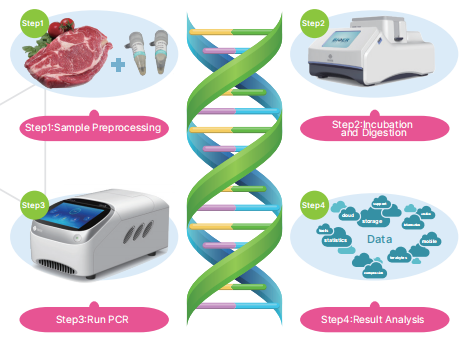
This kit is used for qualitative detection of Porcine-derived nucleic acid (DNA) in various meat products. Identify whether meat products contain Porcine-derived ingredients in response to the phenomenon of adulteration in the market. It can be used Line-Gene series and Quant-Gene series fluorescence quantitativePCR detection system from Bioer or similar instruments from other manufacturers.
Application Field
Halal Food Production
Food Processing and Manufacturing
Food Safety and Regulatory Compliance
Export and International Trade
Consumer Awareness and Education
Storage Conditions
1. The kit need to be transported under freezing conditions.
2. The kit should be stored at -25℃~-15℃ away from light, and avoid repeated freeze-thaw more than 5 times.
3. The kit can be stored for up to 12 months. Please use the kit in the period of validity.
4. The manufacture and expiration date are shown on the outer packaging.
Ordering Information

Related Products
You May Also Like
Bacillus Cereus Nucleic acid Detection kit (Fluorescence PCR)
The Bacillus Cereus Nucleic Acid Detection Kit (Fluorescence PCR) is a cutting-edge molecular assay designed for the sensitive and specific detection of Bacillus cereus nucleic acids. Unlike traditional methods, this kit utilizes fluorescence-based PCR technology, allowing for quantitative measurement of Bacillus cereus DNA with enhanced sensitivity and accuracy. Its quantitative capabilities enable precise detection even at low concentrations, providing valuable insights into the level of contamination. With its user-friendly protocol and rapid turnaround time, this kit offers a reliable and efficient solution for monitoring Bacillus cereus contamination in various samples, making it an indispensable tool for food safety testing, clinical diagnostics, and environmental monitoring.
Pseudomonas Aeruginosa PCR Fluorescence Quantitative Detection kit
The Pseudomonas Aeruginosa PCR Fluorescence Quantitative Detection Kit is a sophisticated molecular assay designed for the quantitative detection of Pseudomonas aeruginosa DNA using fluorescence-based PCR technology. This kit offers high sensitivity and specificity, allowing for precise measurement of Pseudomonas aeruginosa DNA levels in various samples. Its quantitative capabilities enable accurate monitoring of Pseudomonas aeruginosa contamination in clinical, environmental, and industrial settings. With its user-friendly protocol and rapid turnaround time, this kit is an essential tool for ensuring the safety and quality of diverse applications, including healthcare facilities, water systems, and pharmaceutical manufacturing processes.
Diarrheagenic Escherichia Coli 5-subtypes Multiplex Detection Kit (Fluorescence PCR)
The Diarrheagenic Escherichia coli 5-subtypes Multiplex Detection Kit (Fluorescence PCR) is a state-of-the-art molecular assay designed for the simultaneous detection of five subtypes of diarrheagenic Escherichia coli (DEC) using fluorescence-based PCR technology. This multiplex kit enables the rapid and accurate identification of DEC subtypes, including enteropathogenic E. coli (EPEC), enterotoxigenic E. coli (ETEC), enteroinvasive E. coli (EIEC), enterohemorrhagic E. coli (EHEC), and enteroaggregative E. coli (EAEC). By targeting specific genetic markers for each subtype, this kit provides highly sensitive and specific results, allowing for precise diagnosis and characterization of DEC infections. Its multiplex format streamlines the detection process, saving time and resources, and making it an invaluable tool for clinical diagnostics, epidemiological studies, and food safety testing.